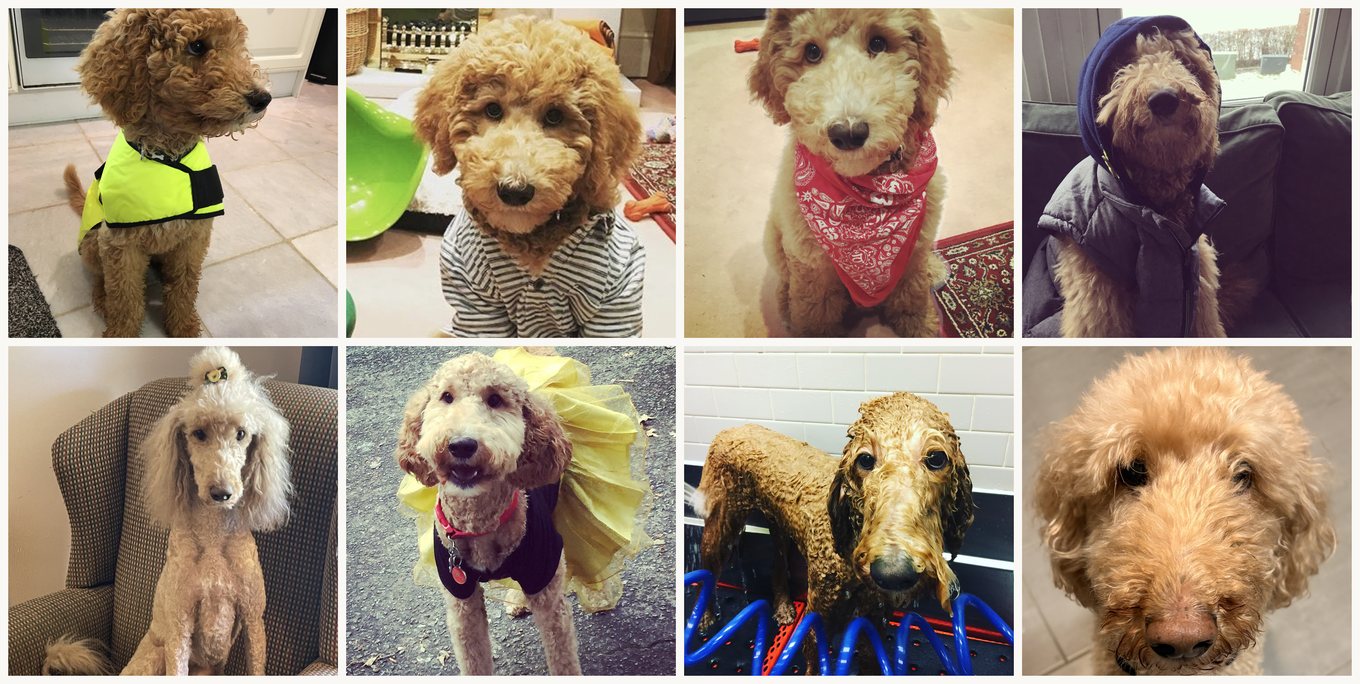
These are all Lizzie.
Different ages. Different outfits. Some very questionable grooming decisions (sorry, Lizzie).
Different chapters. Still Lizzie. Still mine, whatever she learned along the way.
If I took a full-time job tomorrow, I'd want to know whether the AI system I've built could come with me.
Not because I refuse to use their tools. Because some of the speed and judgment they'd be hiring now comes from a system I've spent months building.
It would learn their business. Their rules. Their way of working. I'd expect it to change.
What I'd want to understand is whether learning their business changes my claim to what I brought in.
With Lizzie, nobody needs an explanation. With my AI, I'm starting to think I'd need it in writing.
What I built
I didn't build the model. I built the instructions, habits and checks around it. It knows my clients, my rules, my calendar and how I write. It drafts my emails, checks my sends and keeps my pipeline honest.
None of that came out of the box. It's hundreds of small corrections. Early on it kept ending paragraphs with "That's the whole thing." I told it that line sounds like a robot. Now it checks for that line before I ever see a draft.
Some of it runs the other way. Recently it told me not to put two posts up on the same day. I posted both anyway. The second reached about half as many people. That doesn't prove it was right. It does mean I now have a system that can remind me I ignored its advice.
The value isn't that it can write an email. A fresh account can do that.
It's the context I don't have to reconstruct. The decision rules I don't have to explain again. The workflows I've already worked out, and the checks built from mistakes I don't intend to repeat.
If you hire me, some of the speed and judgment you're hiring comes from that system. I'd want to bring that capability with me, not start again with a login.
The wall I already keep
I know what it's like when it isn't welcome, because it already happened.
One of my clients signed an agreement that rules out the kind of account my AI runs on. They weren't wrong to. So for that client, my system stays out. It doesn't read their email or their call notes.
The work still gets done. It just gets done without the help I've come to rely on everywhere else.
Some of what's in my system is how I work. Some of it is information other people trusted me with. Those aren't the same thing, even when they sit in the same place.
Day one
Picture it. New badge. New laptop. Their accounts, their approved tool list. I open the laptop, and the assistant who knows me isn't there. It's at home.
Can it come in? Many companies only allow AI tools they've approved and pay for. My personal account wouldn't be on that list, and IT would be right to block it. Their data in my account is exactly the leak they're paid to stop.
They'd have a fair objection of their own, too. How do they approve a system they can't inspect? Why depend on something only I know how to maintain? I wouldn't ask them to trust it because I do. I'd ask what they'd need to inspect, what I'd need to remove, and what I could bring into a setup they approve.
Some of it can already move. If your personal Claude account uses your work email, you may be able to move your chats, projects, files and memory into the company's Team or Enterprise account, depending on its settings. Custom skills don't migrate, and connected apps have to be set up again. And its help page says the move is one-way: once your content is in the company workspace, it can't be moved back to a personal account.
Getting it through the door isn't the same as agreeing on what I'm bringing in.
Who pays for it? If it does real work for them, is it software they license, an expense I claim, or something we recognize in the hiring package? Does the work I've already put into it warrant a signing bonus?
And if it helps me exceed my targets, how do we recognize that contribution? Does it get a performance review?
I'm joking about that last one. Mostly.
Does it get onboarded? A new hire gets a week of learning how the place works. Would my system get the same? Their style guide, their customers, their rules about what never leaves the building?
And what are we agreeing they can use? Before I signed, I'd want a lawyer to help identify what I'm bringing in, what the agreement gives the company rights to use, and how it treats improvements made on the job.
Listing my system as prior work would be part of that conversation. It wouldn't settle it.
The quiet option
Some people skip the conversation. Keep it at home, use it on your own laptop, paste things across when nobody's looking.
In 2024, Microsoft and LinkedIn found that 78 percent of people using AI at work brought their own tools. That shows how common it is. It doesn't show whether their bosses knew, what went into those tools, or what it looks like now that these systems learn how we think.
Bringing your own AI isn't the same as hiding it. But when the company hasn't approved it, that leaves the employee using a system the company hasn't agreed to. That's not a position I'd want to be in.
What I'd ask for
Companies spent years writing rules for bringing your own phone. A phone doesn't learn how you think. I'd want an equally clear conversation about a system that does.
I wouldn't connect my personal account to their business. Here's what I'd ask for instead.
- Write down what I'm bringing in before I start.
- Work out which parts could be rebuilt or moved into a setup they approve, without bringing anyone else's information along.
- Agree on what the company can use, and how we'll handle changes made while I work there.
I don't know how much would move over cleanly and how much I'd rebuild. That's part of the conversation.
The easy version is that I bring how I think and they keep what's theirs. Separating the two after a year of working together might not be easy at all.
I'm not asking to get around their controls. I'm asking us to tell apart what I bring from what belongs to them.
With Lizzie, nobody ever needed that conversation. With my AI, I'd want it before I signed.
But getting it through the door is only the first conversation.
What happens as I keep teaching it while I work there?
First published on Substack, October 22, 2026: Can my AI come with me? (Part 1)
The 70% Problem, by email
Session notes, patterns and the occasional thing I got wrong. Few and far between, and only when there is something worth sharing.
Subscribe on Substack